Real example + analysis · Free to use
H&M: a category organized around fit
Write a category brief for a range with three fits and two colors. Separate permanent navigation destinations from temporary filter states.
Practice datasets are fictional and labeled as such. Real store captures are dated observations with their own sources and evidence limits.
Observe the real interface
These captures document H&M on 2026-10-10. Read the numbered observations together with the source and evidence limits. Prices and interface states are historical, not live offers.
Real store observation
H&M: a category organized around fit
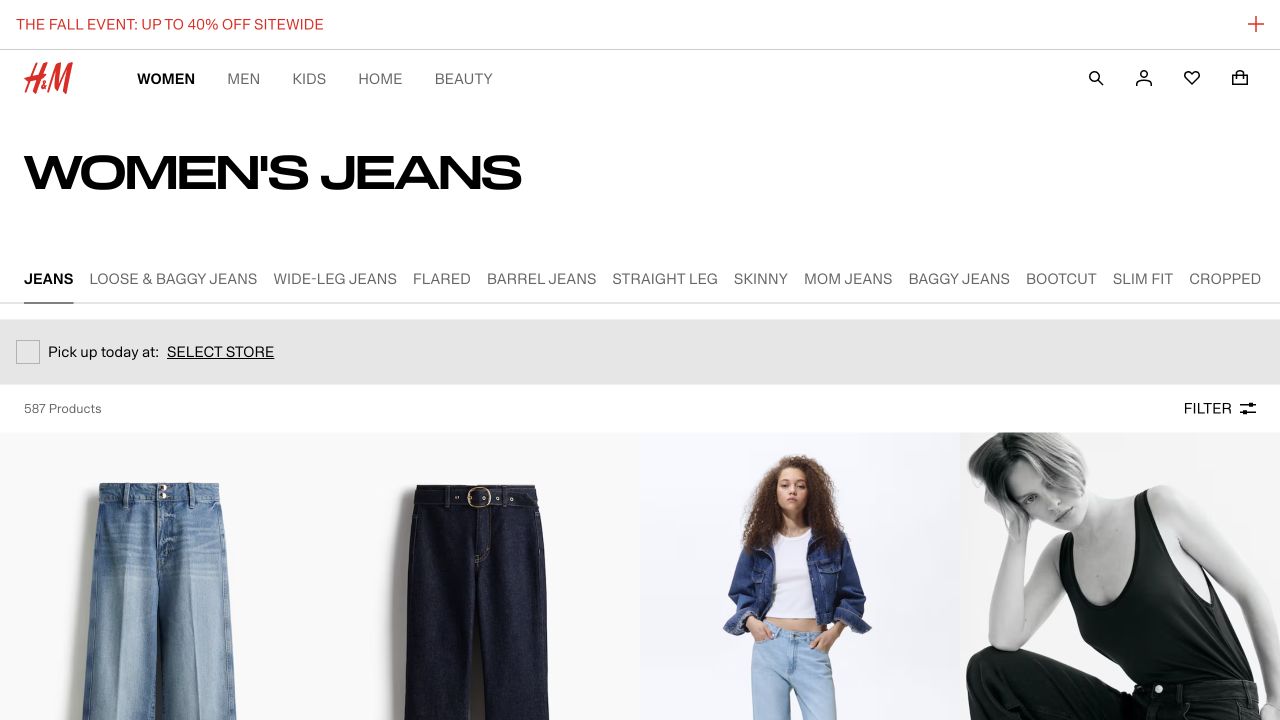
- The heading defines the broad range; links such as Wide-Leg and Straight leg provide narrower routes.
- The product count describes the captured state, not a permanent assortment size.
- Product photography, named styles and price information help distinguish choices inside the range.
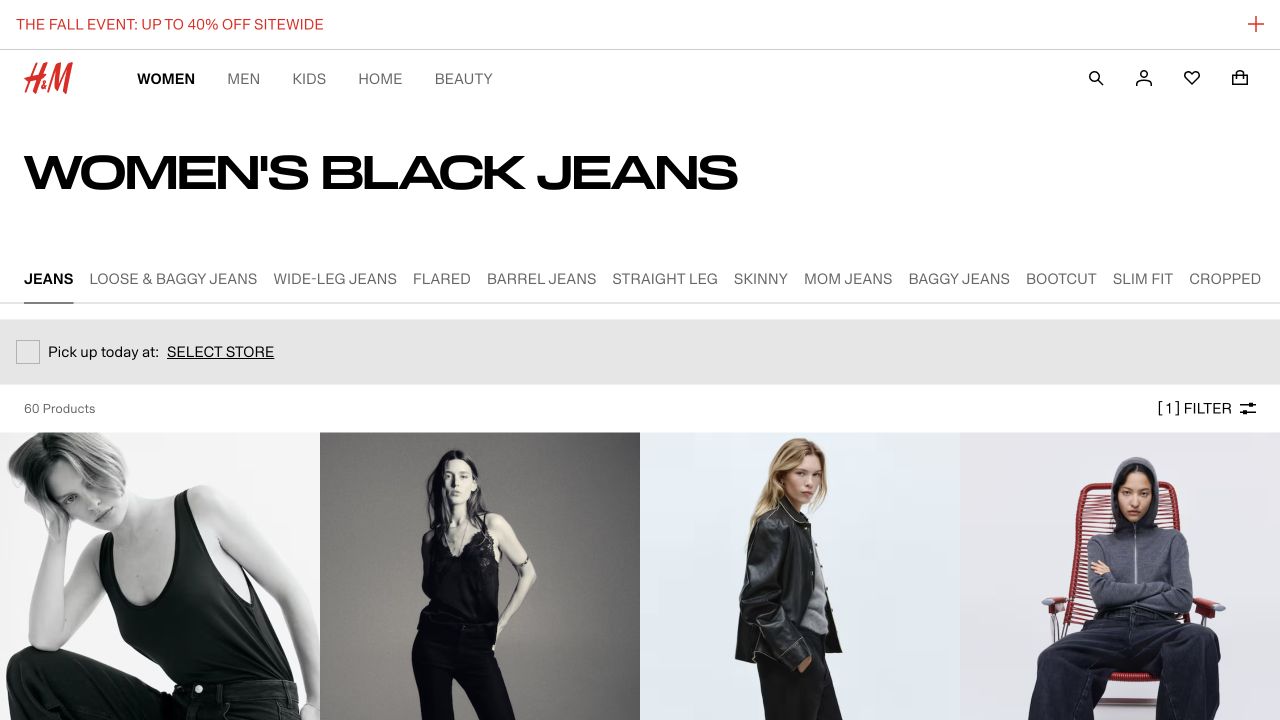
- The black-filter destination shows 60 products compared with 587 in the unfiltered observation.
- The active-filter indication helps explain why the assortment changed.
- A working filtered page does not establish that it should be independently indexed.
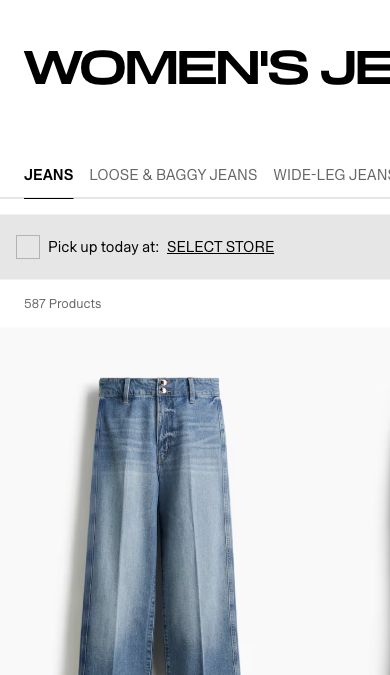
- Fit navigation remains above the range.
- Cards show the product name, price and color choices beneath the photographs.
- This mobile capture is separate from the desktop overview above.
Independent educational analysis of H&M’s public page. No client relationship or endorsement is implied.
Evidence limits. Counts and prices are historical observations. We did not establish H&M’s index policy or ranking performance. Applying a filter through the panel caused an application error in this session; the captured filtered destination was opened directly from a link exposed by the category.
What this example teaches
The visible hierarchy separates a broad department from fit-based routes and a color filter. Those are useful distinctions when writing a category brief: name the shopping task, specify which products qualify and decide how the shopper narrows the range. Copy should support those decisions rather than repeat “jeans” in several paragraphs.
The count change is evidence that the observed destination offers a narrower selection. It is not evidence that all filtered combinations have stable demand or that every one needs an SEO landing page. For your own range, inspect product diversity, maintenance effort and customer questions before making that decision.
A category should also remain useful when inventory changes. Review whether a filter counts distinct models or sellable variants, and check what happens when popular sizes are unavailable. The right acceptance test asks whether the page still fulfills its promise, not whether it contains a prescribed amount of text.
Apply the reasoning to your store
Write a category brief for a range with three fits and two colors. Separate permanent navigation destinations from temporary filter states.
Record the URL, exact item or category, market, time and action that produced each state. Keep the visible observation separate from your intended policy and the evidence still needed. Use the related playbook to turn the finding into an owned implementation task.
Worked acceptance criteria
Pass when each permanent destination has an explicit assortment rule and a maintenance owner, while filters retain understandable selected states. Do not create all six combinations automatically.
Counts and prices are historical observations. We did not establish H&M’s index policy or ranking performance. Applying a filter through the panel caused an application error in this session; the captured filtered destination was opened directly from a link exposed by the category.
Sources and maintenance
Check current platform documentation before implementation. Review these instructions when your platform, catalog behavior or source guidance changes.