Real example + analysis · Free to use
H&M: inspect a filter without assuming its SEO policy
Test a color plus size combination, reload its URL, remove one filter and compare the range. Record each result separately from your intended index policy.
Practice datasets are fictional and labeled as such. Real store captures are dated observations with their own sources and evidence limits.
Observe the real interface
These captures document H&M on 2026-10-10. Read the numbered observations together with the source and evidence limits. Prices and interface states are historical, not live offers.
Real store observation
H&M: inspect a filter without assuming its SEO policy
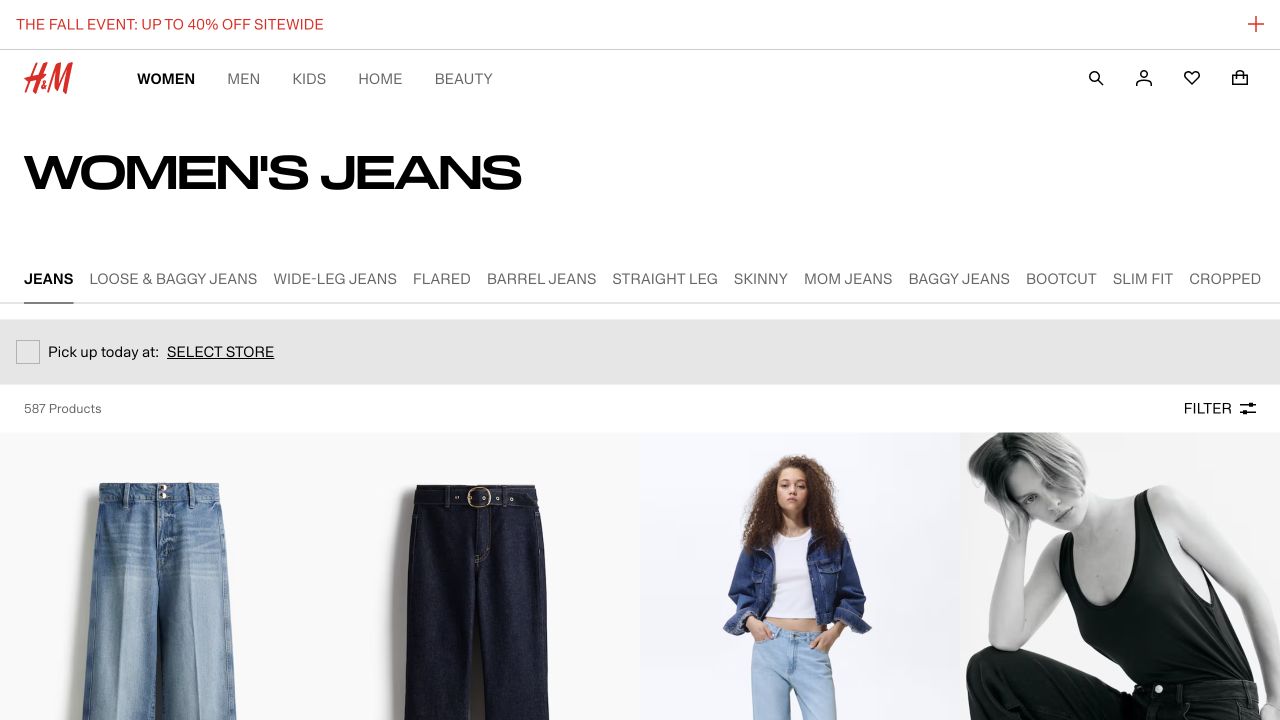
- Record the starting URL and category purpose before changing controls.
- Use the unfiltered assortment as a baseline for the selected state.
- The category exposes separate fit routes as well as a filter control.
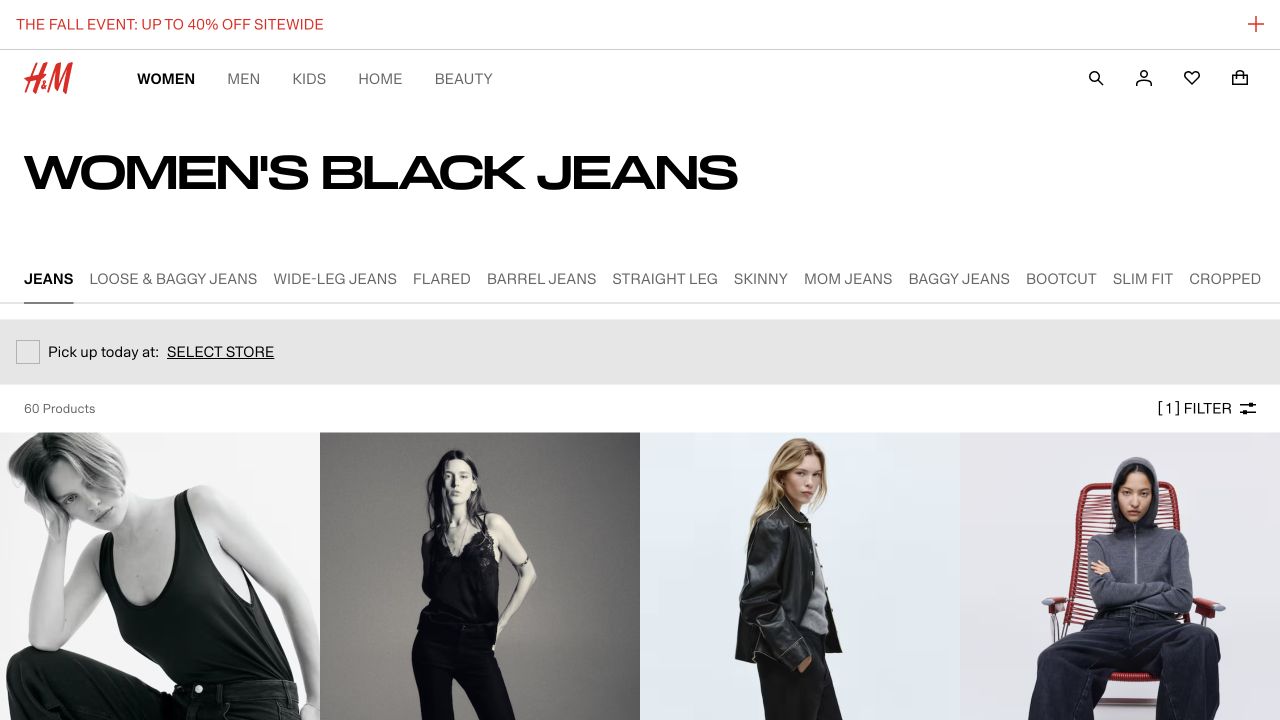
- The observed URL carries colorWithNames and type parameters.
- The page announces the Black filter and shows a reduced product count.
- The screenshot proves a rendered filter state, not crawl access, canonical selection or index eligibility.
Independent educational analysis of H&M’s public page. No client relationship or endorsement is implied.
Evidence limits. No general reliability conclusion can be drawn from one session. Canonical, robots and indexing behavior were not verified for H&M. The filtered screenshot records direct navigation, not a successful checkbox interaction.
What this example teaches
Filter QA needs more than a screenshot of a panel. Record the selected attributes, URL, product range and empty-state behavior. Then inspect technical controls independently. A useful interface state can exist without being a destination you want to promote in search.
In this session the filter panel initially exposed color choices, but selecting a checkbox led to a client-side application error. The category also exposed a direct Black-filter link, which successfully rendered the narrower range. We preserve that distinction rather than presenting the sequence as a clean end-to-end interaction.
On your own store, repeat both paths: interact with the control and open the resulting address directly. If one fails, the issue is reproducible even when the other succeeds. Document browser state and time before assigning a cause. Do not assume that a single failed session reflects every customer’s experience.
Apply the reasoning to your store
Test a color plus size combination, reload its URL, remove one filter and compare the range. Record each result separately from your intended index policy.
Record the URL, exact item or category, market, time and action that produced each state. Keep the visible observation separate from your intended policy and the evidence still needed. Use the related playbook to turn the finding into an owned implementation task.
Worked acceptance criteria
Pass when the selected state is repeatable and the acceptance record separates interface behavior from response, crawl access, canonical and index directives. A failed interaction remains a finding even if direct navigation works.
No general reliability conclusion can be drawn from one session. Canonical, robots and indexing behavior were not verified for H&M. The filtered screenshot records direct navigation, not a successful checkbox interaction.
Sources and maintenance
Check current platform documentation before implementation. Review these instructions when your platform, catalog behavior or source guidance changes.