Real example + analysis · Free to use
Best Buy: turn specifications into a comparison
Create a comparison of two headphones using connection, fit, included accessories and battery-test conditions. Mark any missing evidence explicitly.
Practice datasets are fictional and labeled as such. Real store captures are dated observations with their own sources and evidence limits.
Observe the real interface
These captures document Best Buy on 2026-10-10. Read the numbered observations together with the source and evidence limits. Prices and interface states are historical, not live offers.
Real store observation
Best Buy: turn specifications into a comparison
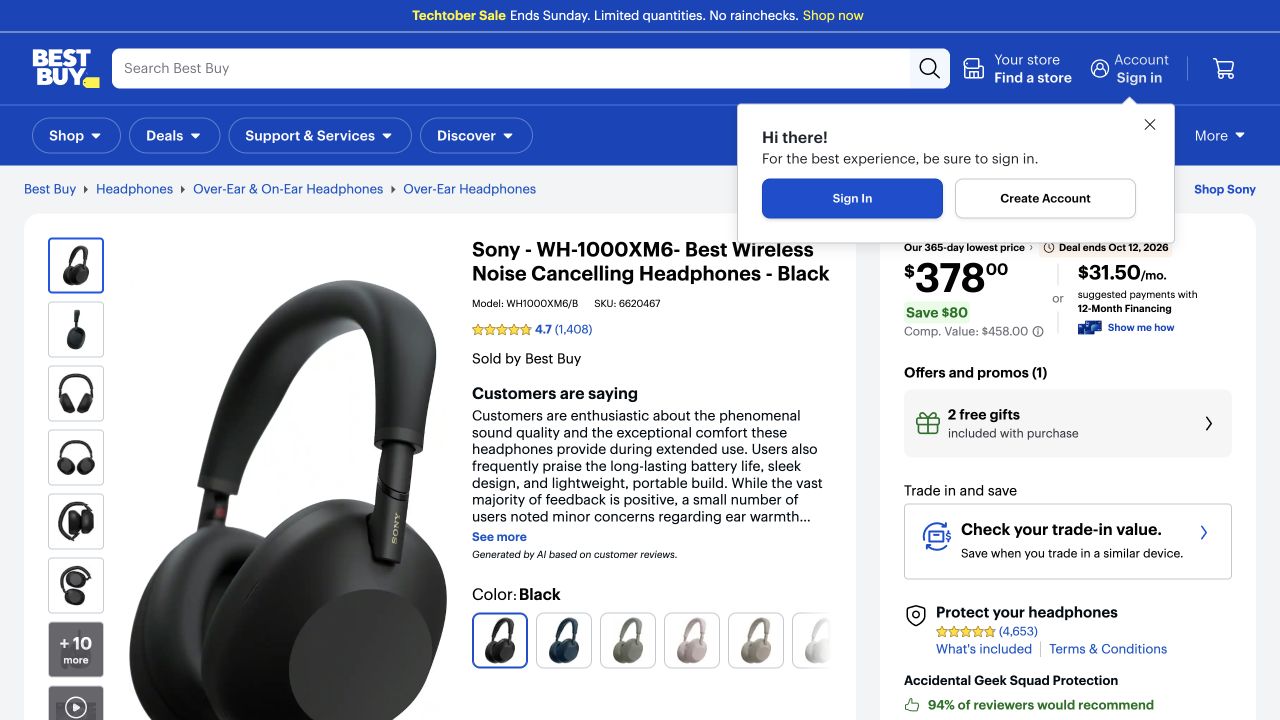
- The manufacturer model and retailer SKU are different identifiers.
- Color and seller context matter when matching the offer elsewhere.
- A product name alone is not sufficient to compare bundles or refurbished units.
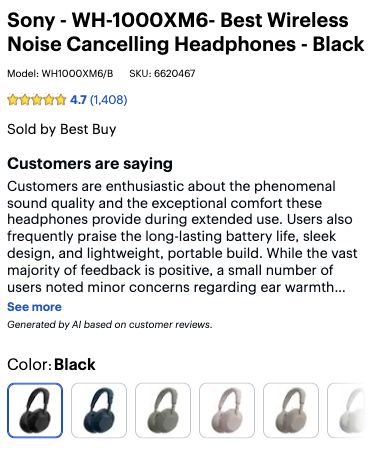
- Model and SKU are visible together.
- Black is the selected color.
- The seller is Best Buy; the AI review summary is not manufacturer specification evidence.
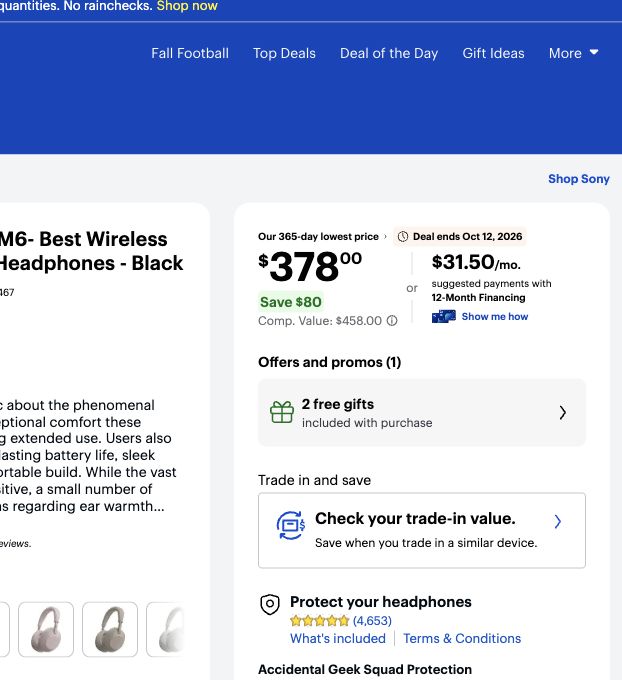
- Connection type and True Wireless describe different properties; they should not be collapsed into one ambiguous “wireless” claim.
- Units make a specification usable for comparison; preserve them when building a table.
- These are retailer-displayed specifications, not measurements performed by this course.
Independent educational analysis of Best Buy’s public page. No client relationship or endorsement is implied.
Evidence limits. The course did not test the headphones or verify manufacturer performance claims. Prices, ratings and delivery estimates are capture-time context, not current purchasing advice.
What this example teaches
Structured specification tables make differences inspectable, but the editor still needs to explain which attributes matter. A shopper deciding how to connect headphones needs a clearer answer than a long paragraph of promotional language. Preserve the exact model and relevant connection information beside the recommendation.
The visible panel separates attributes rather than treating every use of “wireless” as the same claim. This is a good teaching opportunity: name each property precisely, keep units and document the source. Do not combine battery figures from different test conditions into an apparently fair comparison.
For your own product brief, add a source and review date for each decision-critical specification. Request manufacturer evidence where a compatibility statement could be misunderstood. Customer reviews can identify questions worth answering, but they should not replace specifications or independent tests.
Apply the reasoning to your store
Create a comparison of two headphones using connection, fit, included accessories and battery-test conditions. Mark any missing evidence explicitly.
Record the URL, exact item or category, market, time and action that produced each state. Keep the visible observation separate from your intended policy and the evidence still needed. Use the related playbook to turn the finding into an owned implementation task.
Worked acceptance criteria
Pass when model and condition match the intended offer, units are consistent and unknown test conditions remain unknown. A higher number without comparable conditions is not a justified recommendation.
The course did not test the headphones or verify manufacturer performance claims. Prices, ratings and delivery estimates are capture-time context, not current purchasing advice.
Sources and maintenance
Check current platform documentation before implementation. Review these instructions when your platform, catalog behavior or source guidance changes.