Real example + analysis · Free to use
Nike: distinguish unavailable messaging from verified stock
Your store’s PDP says unavailable, but inventory shows five units. List the evidence needed before changing the page’s indexability or redirecting it.
Practice datasets are fictional and labeled as such. Real store captures are dated observations with their own sources and evidence limits.
Observe the real interface
These captures document Nike on 2026-10-10. Read the numbered observations together with the source and evidence limits. Prices and interface states are historical, not live offers.
Real store observation
Nike: distinguish unavailable messaging from verified stock
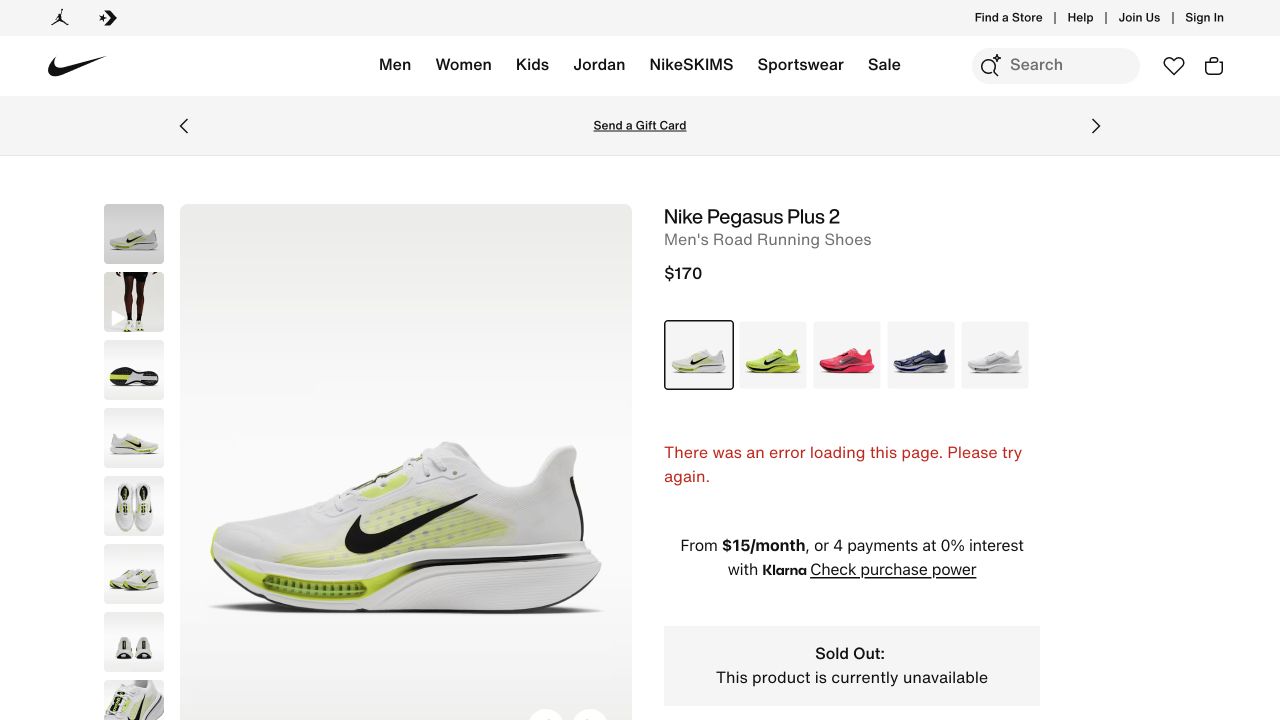
- The product identity and visual context remain visible.
- The page simultaneously reports a loading error and Sold Out.
- This is an example of ambiguous evidence, not proof of a deliberate stock strategy.
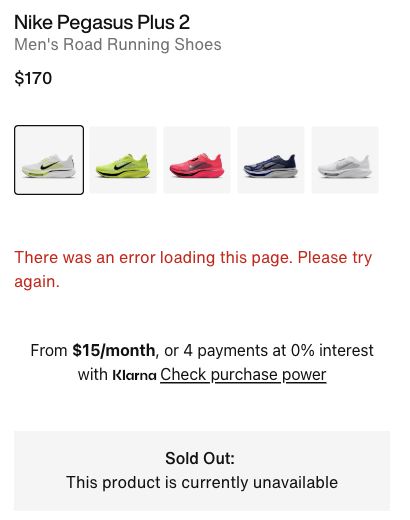
- A customer cannot confidently infer whether the product is truly unavailable or the offer failed to load.
- An analyst should record both messages, the URL and the observation time.
- Actual inventory needs a separate source before a lifecycle decision is made.
Independent educational analysis of Nike’s public page. No client relationship or endorsement is implied.
Evidence limits. Actual Nike stock and the cause of the loading error are unknown. No operational recommendation for Nike is implied.
What this example teaches
Availability decisions should start with inventory evidence. A public page can reveal what the shopper was told, but a rendering or service failure may make that message unreliable. This captured state is useful precisely because it forces us to distinguish the interface from the underlying fact.
For an owned store, compare the selected item in the commerce platform with the anonymous page, category card, markup and feed. If inventory is available but the page cannot retrieve it, assign a delivery or integration incident. If stock is genuinely exhausted, investigate restock timing and sibling variants before deciding the parent page’s future.
Do not remove or redirect a product solely because one session shows an unavailable notice. Record whether the issue reproduces, whether it affects one variant or a family, and which system is authoritative. The action checklist should distinguish a temporary incident from a permanent product retirement.
Apply the reasoning to your store
Your store’s PDP says unavailable, but inventory shows five units. List the evidence needed before changing the page’s indexability or redirecting it.
Record the URL, exact item or category, market, time and action that produced each state. Keep the visible observation separate from your intended policy and the evidence still needed. Use the related playbook to turn the finding into an owned implementation task.
Worked acceptance criteria
Check the exact variant, fulfillment location, anonymous session, cached response and integration state. Resolve the offer discrepancy first. The supplied facts do not justify retiring the page.
Actual Nike stock and the cause of the loading error are unknown. No operational recommendation for Nike is implied.
Sources and maintenance
Check current platform documentation before implementation. Review these instructions when your platform, catalog behavior or source guidance changes.