Real example + analysis · Free to use
Nike: product identity across color variants
Choose a two-color product in your store. Record model, item ID, selected color, final URL and visible price before and after changing the color. Reopen the second URL without the original session.
Practice datasets are fictional and labeled as such. Real store captures are dated observations with their own sources and evidence limits.
Observe the real interface
These captures document Nike on 2026-10-10. Read the numbered observations together with the source and evidence limits. Prices and interface states are historical, not live offers.
Real store observation
Nike: product identity across color variants
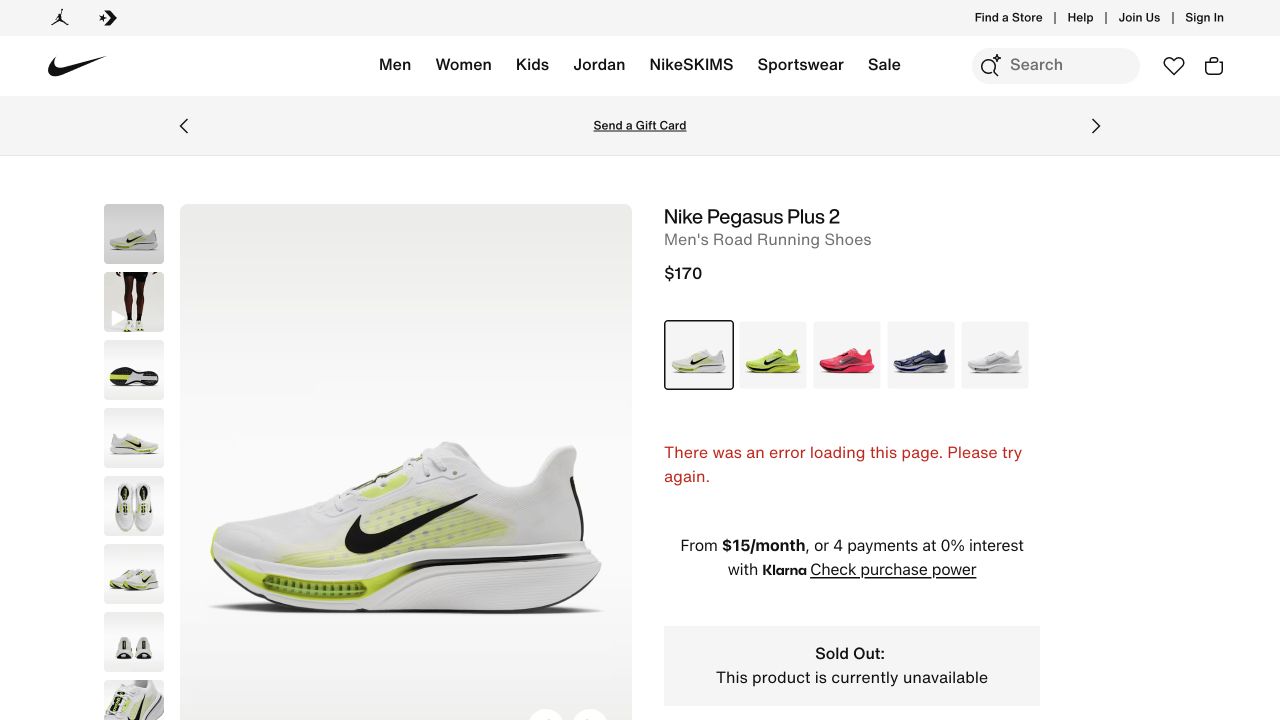
- The model name and product type establish what is being offered before a shopper chooses a color.
- The gallery provides multiple views of the same item; the swatches are separate navigable choices.
- A loading error is visible in this session. The simultaneous Sold Out message is not sufficient evidence of actual inventory.
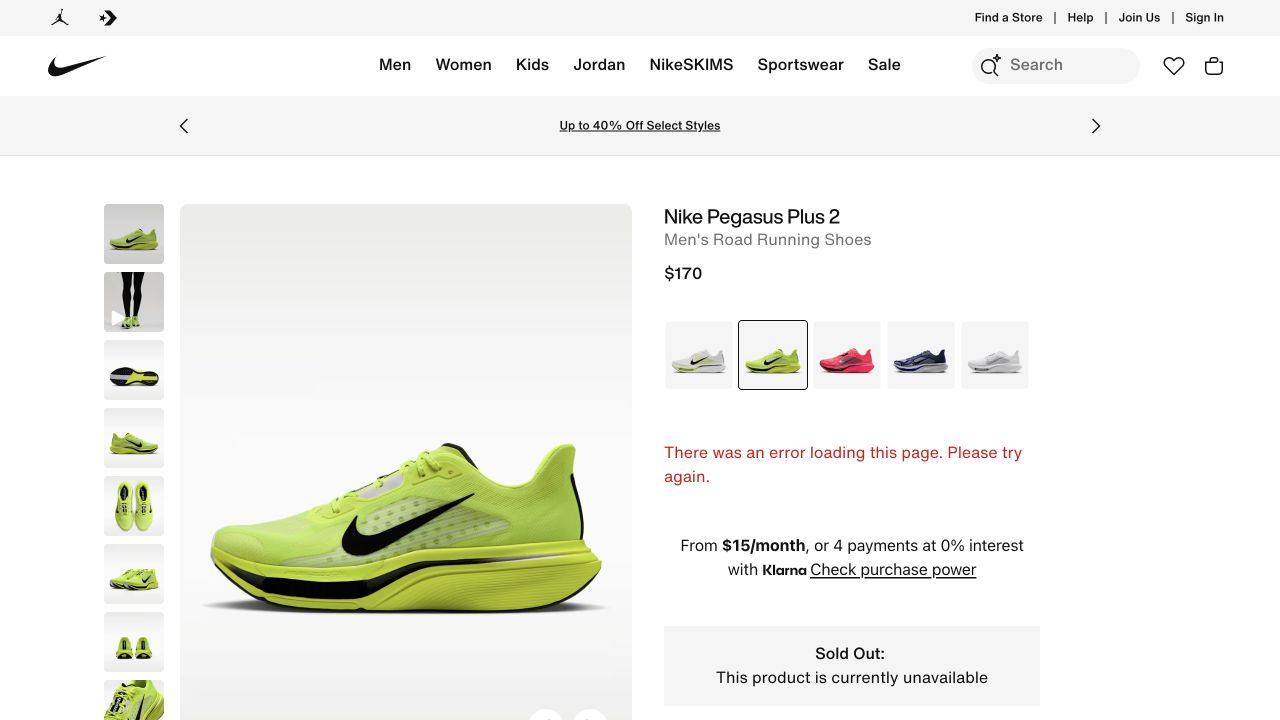
- The color selection changes the style suffix from IM2541-101 to IM2541-700.
- The observed price remains $170; do not assume other colors or markets share that price.
- Record identity and selection separately from availability, which remains uncertain because the error persists.
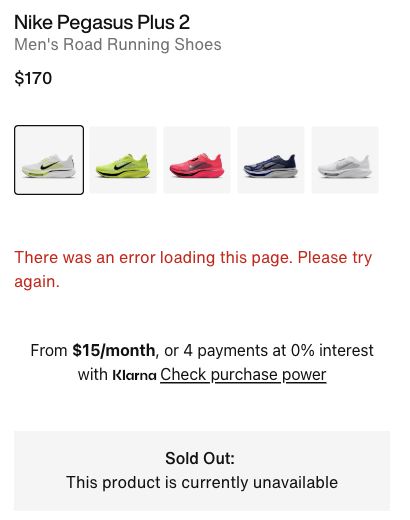
- A customer cannot confidently infer whether the product is truly unavailable or the offer failed to load.
- An analyst should record both messages, the URL and the observation time.
- Actual inventory needs a separate source before a lifecycle decision is made.
Independent educational analysis of Nike’s public page. No client relationship or endorsement is implied.
Evidence limits. Public interface observation only. No canonical, indexation, structured-data, conversion or private feed audit was performed. The page reported a loading error; actual stock was not confirmed.
What this example teaches
A useful PDP analysis follows a decision through its states. Here the model stays the same while the selected color and style identifier change. This gives the learner a concrete way to distinguish shared product information from offer-specific information. It does not tell us how Nike groups these items in its private feed.
On your own store, copy the variant destination and open it in a fresh session. Check whether the same option is selected without relying on cookies. Then compare the selected image, price and buying action with the item advertised elsewhere. A swatch that looks correct is only one part of that contract.
The image gallery and identifying text serve different jobs: photographs help recognize the item, while the name, type and selected attributes make the offer explicit. Preserve both when simplifying a mobile layout. Removing identifying text because the image looks obvious can make comparison harder.
Apply the reasoning to your store
Choose a two-color product in your store. Record model, item ID, selected color, final URL and visible price before and after changing the color. Reopen the second URL without the original session.
Record the URL, exact item or category, market, time and action that produced each state. Keep the visible observation separate from your intended policy and the evidence still needed. Use the related playbook to turn the finding into an owned implementation task.
Worked acceptance criteria
Pass when the second URL reproduces the promised selection and the fields match your catalog. If it opens the default color, record a landing-state mismatch rather than changing the title to hide it.
Public interface observation only. No canonical, indexation, structured-data, conversion or private feed audit was performed. The page reported a loading error; actual stock was not confirmed.
Sources and maintenance
Check current platform documentation before implementation. Review these instructions when your platform, catalog behavior or source guidance changes.