Industry playbook + project · Free to use
Fashion ecommerce SEO playbook
Turn fit, color, size and seasonal stock into coherent category, product and feed decisions.
Practice datasets are fictional and labeled as such. Real store captures are dated observations with their own sources and evidence limits.
Start with fit and assortment, not generic fashion copy
Use this project for one clothing department in one market. Collect model IDs, colorways, sizes, garment measurements, composition, stock and seasonal dates. The output is a category brief plus a variant and lifecycle matrix. A model with eight sizes is not eight different styles; count assortment and inventory at the appropriate level.
Choose a shopper task such as finding high-rise wide-leg jeans in a suitable inseam. Separate style language from measurable attributes. “Relaxed,” “oversized” and “true to size” need a consistent meaning or supporting evidence. Avoid treating a manufacturer’s size label as a body measurement.
Real store observation
H&M: a category organized around fit
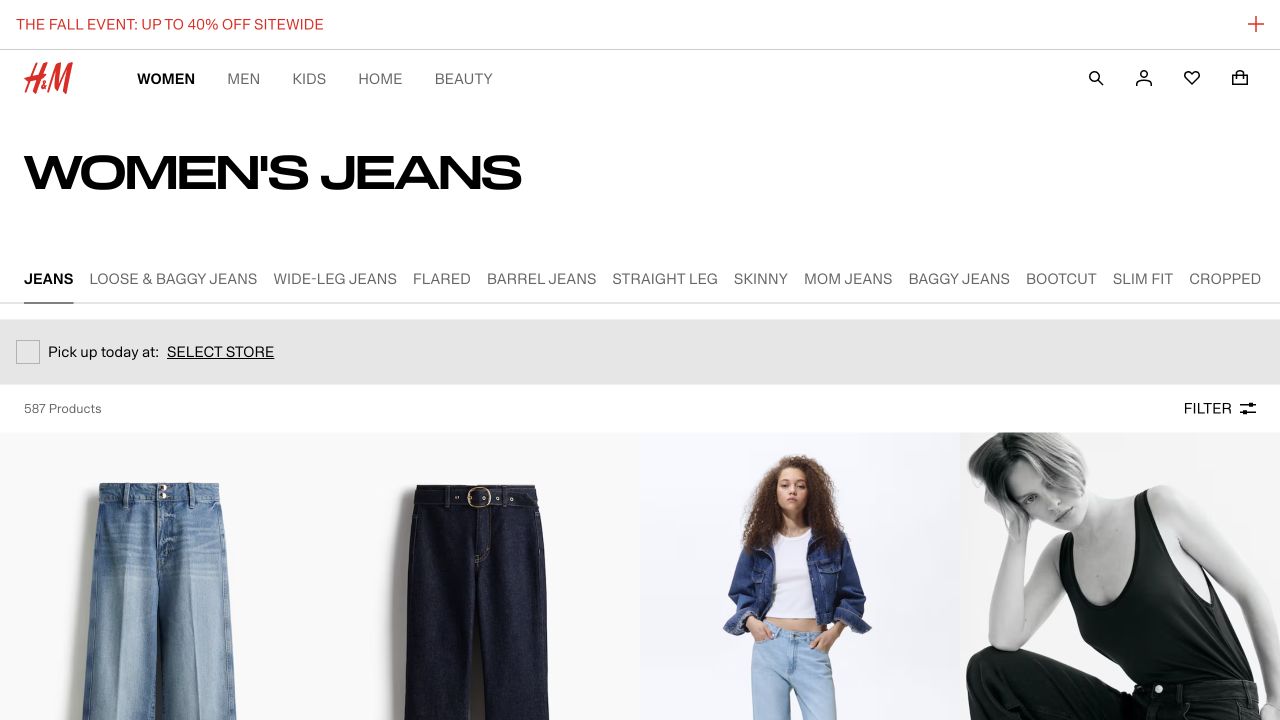
- The heading defines the broad range; links such as Wide-Leg and Straight leg provide narrower routes.
- The product count describes the captured state, not a permanent assortment size.
- Product photography, named styles and price information help distinguish choices inside the range.
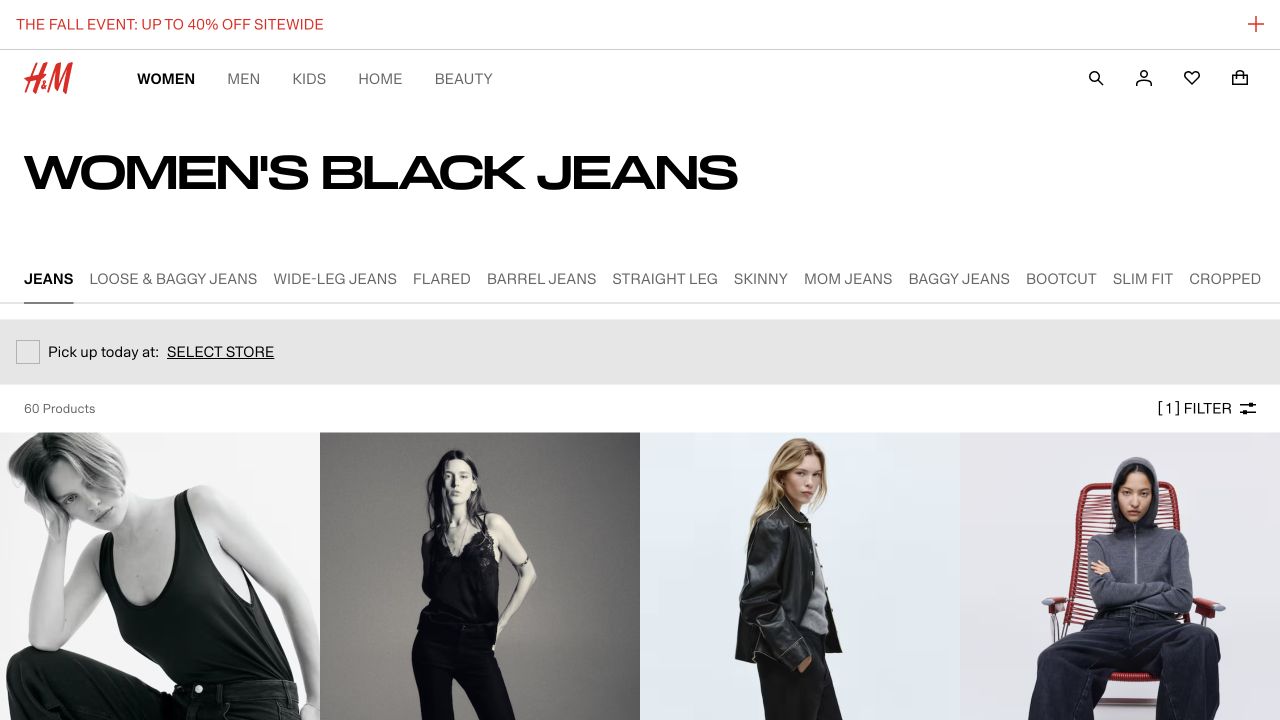
- The black-filter destination shows 60 products compared with 587 in the unfiltered observation.
- The active-filter indication helps explain why the assortment changed.
- A working filtered page does not establish that it should be independently indexed.
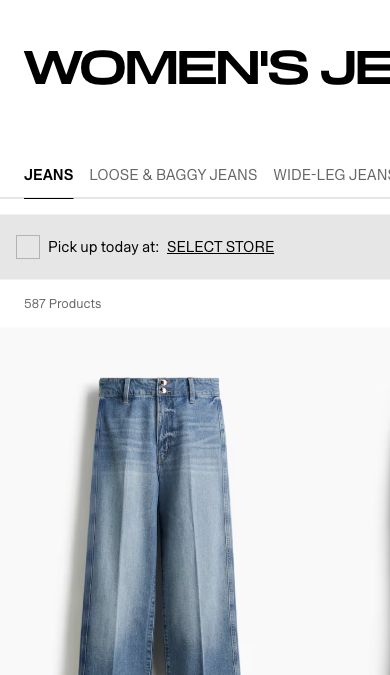
- Fit navigation remains above the range.
- Cards show the product name, price and color choices beneath the photographs.
- This mobile capture is separate from the desktop overview above.
Independent educational analysis of H&M’s public page. No client relationship or endorsement is implied.
Evidence limits. Counts and prices are historical observations. We did not establish H&M’s index policy or ranking performance. Applying a filter through the panel caused an application error in this session; the captured filtered destination was opened directly from a link exposed by the category.
Real store observation
H&M: inspect a filter without assuming its SEO policy
- Record the starting URL and category purpose before changing controls.
- Use the unfiltered assortment as a baseline for the selected state.
- The category exposes separate fit routes as well as a filter control.
- The observed URL carries colorWithNames and type parameters.
- The page announces the Black filter and shows a reduced product count.
- The screenshot proves a rendered filter state, not crawl access, canonical selection or index eligibility.
Independent educational analysis of H&M’s public page. No client relationship or endorsement is implied.
Evidence limits. No general reliability conclusion can be drawn from one session. Canonical, robots and indexing behavior were not verified for H&M. The filtered screenshot records direct navigation, not a successful checkbox interaction.
Build useful fit and color destinations
Write inclusion rules for the category before producing copy. A black-jeans range should not fill gaps with dark blue items unless the page makes that broader scope clear. Expose stable fit categories through navigation and keep transient stock or sort states out of automatic landing-page generation.
Use category text to resolve distinctions shoppers need: waist rise, leg shape, stretch and inseam. Link to measurement instructions close to the decision. Detailed editorial advice can support the category, but it should not claim every included item shares a fabric or fit property that belongs to only some models.
| Field | Fictional completed rule |
|---|---|
| Category | Black wide-leg jeans |
| Model inclusion | Black colorway and wide-leg silhouette |
| Variant details | Waist size and inseam; stock per combination |
| Evidence | Supplier composition and garment measurements |
| Exclusions | Straight-leg styles and unverified “100% cotton” claims |
Make size and color promises survive the click
Open links for two colors and two sizes. Compare selected state, model identity, image and availability. The image can show the right color while the size defaults incorrectly. A feed item must represent the promised sellable combination, not whichever option the theme initially selects.
When the preferred size is unavailable, show the limitation and meaningful choices. A different color in the same size and a different model with a similar fit are different alternatives. Explain the distinction. Do not silently choose another size to preserve an active buying button.
Separate a seasonal collection from a product lifecycle
Maintain a recurring seasonal destination when its purpose remains useful, but review individual items independently. One discontinued colorway does not require removing the entire model. A permanently retired style may still need care information or an order-support reference.
Before a sale, synchronize price dates and stock across category cards, PDPs and feed data. After the event, remove expired discount promises and review the range. Keep the event calendar linked to merchandising decisions so content does not advertise a collection that operations cannot supply.
Worked project: a missing popular size
A fictional denim category has seven black wide-leg models. Three lack the most searched waist size this week. The category still serves a range, but the editor must not call every model “available in all sizes.” The product matrix distinguishes temporary shortages from discontinued combinations.
The team keeps the category, corrects blanket availability copy, verifies the size filters against current inventory and tests two unavailable variant links. The supplied template records each decision and its review trigger. This is a practice project, not an account of H&M’s internal inventory strategy.
Acceptance and a useful next investigation
Practice: returns repeatedly mention that a model’s “regular length” is too long. Write an evidence request and a page improvement without claiming a universal fit. Worked answer: obtain garment inseam measurements by size, review the measurement method and add a clear measurement guide. Customer comments motivate investigation; they do not establish the dimensions themselves.
Pass when an editor can maintain category membership, a shopper can identify the chosen variant and each claim has a source. Compare relevant query themes and product-selection behavior after publication, alongside stock and promotion changes. Do not infer an SEO improvement from the recognizability of the brand in the example.
Sources and maintenance
Check current platform documentation before implementation. Review these instructions when your platform, catalog behavior or source guidance changes.